Funding & Compliance
When to Update Your FCC Broadband Labels (ISP Guide)
When was the last time you updated your FCC broadband labels?
Rick Seemann, VP, Product Management
November 27, 2024 · 3 MIN · UPD JUN 16, 2026
ISPs should update their FCC broadband labels anytime they change service details such as pricing, speeds, data limits, or fees. Keeping labels current is both an FCC compliance requirement and a matter of being transparent with customers.
Running a broadband business is no small feat. Between managing service plans, staying ahead of industry trends, and keeping your customers happy, something always demands your attention. But here’s a quick question: when was the last time you updated your FCC broadband labels?
If you’re thinking, “Wait, do I really need to?“ - the answer is yes. Anytime you make changes to your service, whether it’s tweaking prices, adjusting speeds, or rethinking data limits, those labels need an update too. It’s not just about compliance with the FCC (though that’s a big deal); it’s about being transparent with your customers.
Don’t worry - updating those labels doesn’t have to be a headache. We’ve got just the tool to make it easy. Let’s dive into why these labels matter, when you need to update them, and how you can simplify the process with Sonar.
Why FCC Broadband Labels Matter for ISPs
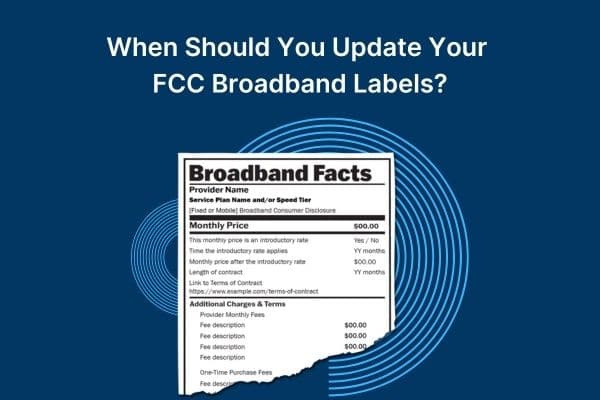
The FCC broadband labels, introduced to provide consumers with clear, standardized information about internet services, are like nutrition labels for broadband plans.
They cover critical details like:
Service plan name and price
Download and upload speeds
Data limits
Additional fees
These labels empower customers to make informed choices and hold providers accountable for delivering on their promises. But they also come with a responsibility: as a broadband provider, you must ensure your labels are accurate and up-to-date.
Failing to maintain accurate labels can lead to confusion for your customers and potential compliance issues with the FCC. Transparency isn’t just good ethics - it’s the law.
When Should You Update Your Broadband Labels?
Any changes to your service offerings trigger the need for a label update.
Here are some examples:
Pricing changes: Whether it’s a discount, an increase, or a promotional offer, pricing transparency is key.
Speed upgrades or downgrades: Let your customers know exactly what they’re getting.
Data limits: If you’ve adjusted data caps or introduced unlimited options, your broadband label must reflect this.
New fees or adjustments: Customers should never be surprised by hidden costs.
Even minor updates require label revisions to maintain compliance and avoid any potential penalties or customer dissatisfaction.
How Sonar Helps ISPs Stay Label-Compliant
Keeping your FCC broadband labels updated might sound tedious, but it doesn’t have to be. Sonar offers a Free Maker to streamline the process.
Here’s how it can help:
Easy to Use: With a user-friendly interface, you can quickly input your updated service details.
Customizable: Tailor your labels to reflect the exact offerings of your broadband plans.
Compliant: Generate labels that meet FCC standards, so you can focus on your business without worrying about regulatory hurdles.
Frequently asked questions
When do ISPs need to update FCC broadband labels? Anytime you change a service offering, including pricing, download or upload speeds, data limits, or additional fees. Even minor updates require a label revision to stay compliant.
What goes on an FCC broadband label? Each label lists the service plan name and price, download and upload speeds, data limits, and any additional fees, so customers can compare plans clearly.
Why does keeping broadband labels accurate matter? Inaccurate labels can confuse customers and create FCC compliance issues. Transparency is both an ethical practice and a legal requirement for broadband providers.

Questions, answered.
When should an ISP update its FCC broadband labels?
ISPs must update their FCC broadband labels anytime they change pricing, speeds, data limits, or fees. Even minor service changes require a label revision to maintain FCC compliance.
What changes require updating FCC broadband labels?
Any change to pricing, speeds, data limits, or fees requires updating the label. Even minor service changes call for a label revision to stay compliant with the FCC.
What information is included on an FCC broadband label?
FCC broadband labels work like nutrition labels for internet plans. They list the plan name, price, upload and download speeds, data limits, and additional fees.
Why do accurate FCC broadband labels matter for internet providers?
Inaccurate broadband labels can cause customer confusion and trigger FCC compliance issues. Keeping labels current with your service details helps providers avoid both problems.
See it on the platform
20 minutes wired to your operation.
An ISP-only specialist walks Sonar through your specific use case. No generic deck, no horizontal SaaS pitch.
Book a meetingWritten by
Rick SeemannVP, Product Management
Rick Seemann is VP of Product Management at Sonar Software. He covers new features, product releases, and how the platform keeps ISPs BEAD-compliant.
All posts by Rick Seemann