Funding & Compliance
Texas Secures Over $3.3 Billion in BEAD Broadband Funding
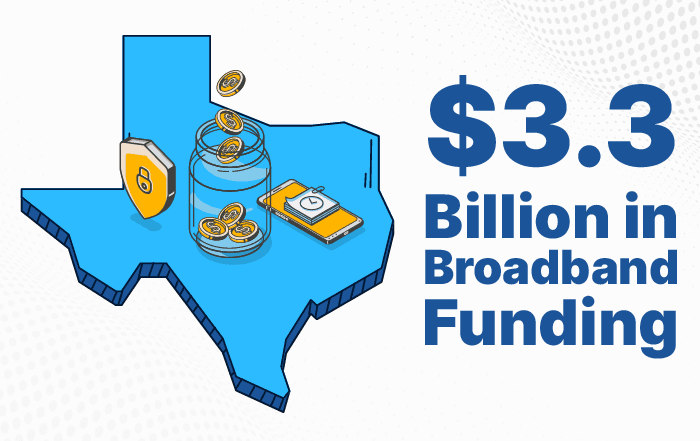
Texas is set to receive a substantial investment of over $3.3 billion from the federal government for broadband expansion.
Taneil Currie, Former Senior Manager, Growth Marketing
July 11, 2023 · 3 MIN · UPD JUN 16, 2026
Texas is set to receive over $3.3 billion in federal broadband funding, the largest single-state allocation under the Broadband Equity, Access, and Deployment () program. The funds target the nearly 2.8 million Texan households that currently lack broadband service.
In a significant move to address the digital divide, this funding from the federal government is part of the Biden administration's efforts to expand broadband access across the country. The Broadband Equity, Access, and Deployment program, encompassing a total budget of $42.45 billion, aims to connect millions of households and small businesses nationwide, with a focus on the nearly 2.8 million Texan households currently lacking broadband services. Let's delve into the details of this initiative and its potential impact on the state.
How BEAD Funding Connects Texans
As part of President Joe Biden's 2021 Bipartisan Infrastructure Law, the Broadband Equity, Access, and Deployment program has set aside $42.45 billion to bridge the digital divide. Within this allocation, each state is guaranteed a minimum of $107 million. For Texas, the federal funds amount to an impressive $3.3 billion, signifying a substantial boost to ongoing efforts by state lawmakers.
Expanding Broadband Availability Across the State
The primary objective of the federal funding is to provide broadband access to over 8.5 million households and small businesses across the country. With nearly 2.8 million Texan households currently without broadband, this investment will play a crucial role in expanding internet availability statewide. The Texas Broadband Development Office will oversee the allocation of funds, targeting areas where the state and federal broadband maps indicate a need for service.
Broadband Mapping Accuracy Challenges
While the federal and state broadband maps are essential tools for identifying underserved areas, their accuracy has been subject to debate. Service providers and local officials have raised concerns about the precision of these maps, emphasizing the need for a comprehensive assessment to ensure the funds are directed to the right places. The Texas government, in collaboration with relevant stakeholders, should strive for an accurate mapping system to maximize the impact of the funding.
Additional Federal Funding Programs for ISPs
In addition to the Broadband Equity, Access, and Deployment program (BEAD), the federal government has established other initiatives to promote connectivity. The Affordable Connectivity Program, with over $14 billion in funding, aims to make broadband services more affordable for eligible households nationwide. The Tribal Broadband Connectivity Program has been allocated $2 billion, while the Department of Agriculture's Reconnect Program will receive the same amount to provide loans and grants for broadband infrastructure development in rural areas.
State Investments Through House Bill 9
Texas lawmakers have also taken significant steps to address the digital divide within the state. House Bill 9, championed by State Rep. Trent Ashby, R-Lufkin, has allocated $1.5 billion to expand internet availability. Governor Greg Abbott signed HB 9 into law this month, and the final approval of these funds will be determined by a statewide vote in November. The $3.3 billion in federal funding will complement the state's efforts, enabling a more comprehensive and accelerated approach to bridging the digital divide in Texas.
The Biden administration's recent announcement of over $3.3 billion in federal funding for Texas marks a significant milestone in the state's quest to provide widespread broadband access. As millions of households and small businesses across the nation, particularly in Texas, stand to benefit from this initiative, the importance of reliable internet connectivity is being recognized as a crucial infrastructure need. With careful consideration and an accurate mapping system, these funds have the potential to uplift communities, empower businesses, and bridge the digital divide for Texans, driving the state's progress and economic growth into the future.
Frequently asked questions
How much BEAD funding is Texas receiving?
Texas is set to receive over $3.3 billion, the largest allocation among all states under the $42.45 billion Broadband Equity, Access, and Deployment (BEAD) program.
Who manages the broadband funds in Texas?
The Texas Broadband Development Office oversees fund allocation, directing investment to areas that state and federal broadband maps identify as underserved.
What is the funding meant to accomplish?
The funding aims to connect the nearly 2.8 million Texan households currently without broadband, as part of a national effort to reach over 8.5 million households and small businesses.
Questions, answered.
How much BEAD broadband funding did Texas receive?
Texas is set to receive over $3.3 billion in federal broadband funding, the largest allocation among all states.
What is the BEAD program?
BEAD stands for Broadband Equity, Access, and Deployment. It is a $42.45 billion program created under the 2021 Bipartisan Infrastructure Law to fund broadband expansion.
How many Texas households currently lack broadband service?
Nearly 2.8 million Texan households currently lack broadband service.
Who oversees the allocation of broadband funds in Texas?
The Texas Broadband Development Office oversees fund allocation, targeting areas flagged as underserved on state and federal broadband maps. Mapping accuracy remains a debated challenge, since providers and local officials have questioned whether the maps correctly identify underserved areas.
See it on the platform
20 minutes wired to your operation.
An ISP-only specialist walks Sonar through your specific use case. No generic deck, no horizontal SaaS pitch.
Book a meeting