Operations
Inventory Control for ISPs Using Business Intelligence Reporting
Explore how to leverage Business Intelligence Reporting to track your business's inventory levels and prevent costly inventory shortages.
Taneil Currie, Former Senior Manager, Growth Marketing
October 28, 2022 · 4 MIN · UPD JUN 16, 2026
Do you find it increasingly difficult to keep track of your company’s inventory?
Business Intelligence (BI) reporting gives Internet Service Providers a data-driven way to track inventory levels in real time, down to the individual SKU, so they can prevent costly shortages and lost sales. Keeping track of out-of-stock items wastes valuable time and resources, but there are solutions to this problem thanks to Business Intelligence.
A shortage of inventory can result in lost sales and decreased customer satisfaction, which can be a recipe for disaster. Therefore accurate inventory reporting is imperative across multiple departments, and that is where Business Intelligence reporting comes in handy.
BI reports help users collect, analyze, and dissect data. With BI reporting, you can create customized inventory management reports that fit your business’s specific needs. In this article, we will explore how to leverage Business Intelligence reporting to keep track of your business’s inventory levels and prevent costly inventory shortages.
Why inventory management matters for ISPs
Inventory is a critical part of any ISP. Not only does it represent a significant financial investment, but it’s also vital to ensuring customers have access to the products and services they need.
In a competitive market, it is essential to have a well-run inventory management system in place. With customer expectations at an all-time high, the importance of inventory management becomes even more apparent. If your customers cannot meet their needs, they’ll likely turn to your competitors.
Many businesses treat inventory as an afterthought, and while they invest time and resources into creating a product catalog, they need to manage that inventory effectively. The outcome can lead to loss of sales, low customer satisfaction, and even inventory shortages.
There is an increasing importance of data when it comes to inventory management. In the past, Internet Service Providers, like most businesses, tracked their inventory manually with spreadsheets and pen-and-paper records. Consequently, they often made inventory-level decisions based on gut instinct and experience.
Despite this, data-driven inventory management systems and Business Intelligence reporting are rapidly becoming the norm since they allow Internet Service Providers to track their inventory in real-time, identify trends, and make better stocking decisions.
Benefits of Business Intelligence reporting for inventory management
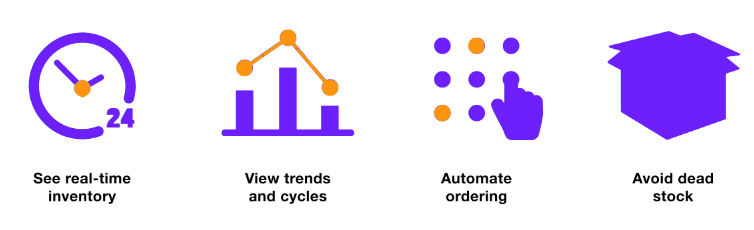
Increased accuracy: Business Intelligence reporting tracks inventory levels down to the individual SKU, so it is more accurate than manual methods.
Increased efficiency: With BI reporting, businesses can save time and increase productivity by automating the process of tracking inventory levels.
Increased visibility: The advantage of BI reporting is that it provides Internet Service Providers with real-time insights into their stock levels and buying trends, allowing them to respond quickly to market changes.
Reduced costs: ISPs can reduce inventory costs through Business Intelligence reporting. These reports help them avoid overstocking and understocking.
What Business Intelligence reporting makes possible
Business Intelligence reports offer a great deal of customization and flexibility, making them perfect for businesses seeking better control. Companies can tailor their inventory management reports to track the specific data they need to make informed decisions about stock levels.
Inventory data ISPs can report on
Sales data: Using this data, you can develop a detailed picture of your company’s inventory levels and sales trends based on data about the services or products you’ve sold.
Purchase orders: In addition to items ordered, this data includes information such as the item’s name, description, and quantity. This data can be used to track inventory levels and trends in purchases.
Receiving data: Track the overall incoming inventory handling, allowing you to closely monitor the inbound inventory items shipped to your warehouses.
Turn inventory data into informed business decisions
Making informed business decisions begins with analyzing and acting on the data using reports created with Business Intelligence. For example, Internet Service Providers can use the data from their reports to:
· Accurately forecast future equipment procurement
· Keep track of inventory levels and adjust ordering levels as sales trends change
· Assess suppliers’ prices and choose the most competitive ones
· Reduce inventory invested in increasing cash flow
· Identify supply chain issues with suppliers and make adjustments accordingly
· Automate inventory reporting to keep a tight leash on your RMA
· Improve the bottom line and make informed business decisions
There are no limits when it comes to Business Intelligence. When you have greater insight into your business data, you can make better business decisions about inventory management.
Interested in learning how your business can get better control and visibility on inventory? Schedule a demo and see Sonar’s reporting module in action. https://sonar.software/book-a-demo
Frequently asked questions
How does Business Intelligence reporting improve inventory accuracy for ISPs?
BI reporting tracks inventory levels down to the individual SKU and updates in real time, which is more accurate than manual spreadsheet or pen-and-paper methods that rely on gut instinct.
What inventory data can an ISP report on with BI?
ISPs can report on sales data, purchase orders, and receiving data to build a detailed picture of inventory levels, purchasing trends, and inbound shipments to their warehouses.
How does BI reporting help prevent inventory shortages?
By giving real-time visibility into stock levels and buying trends, BI reporting helps ISPs forecast equipment procurement, adjust ordering as sales trends change, and avoid both overstocking and understocking.
Questions, answered.
How can ISPs use Business Intelligence reporting for inventory management?
Business Intelligence reporting tracks inventory levels down to the individual SKU, which is more accurate than manual spreadsheet methods. It gives ISPs real-time insight into stock levels and buying trends so they can respond quickly to market changes.
What are the benefits of BI reporting for tracking inventory levels?
BI reporting lets ISPs forecast equipment procurement and adjust ordering as sales trends change, which reduces both overstocking and understocking. It replaces manual, gut-instinct stocking decisions with data-driven inventory management.
Why does inventory management matter for Internet Service Providers?
Inventory shortages can cause lost sales and decreased customer satisfaction, so accurate inventory reporting is critical for ISPs. Tracking stock levels closely helps providers keep the right equipment on hand.
What inventory data can ISPs report on with Business Intelligence?
ISPs can report on stock levels down to the individual SKU along with buying trends across their inventory. This data supports procurement forecasting and lets providers adjust ordering as sales patterns shift.
See it on the platform
20 minutes wired to your operation.
An ISP-only specialist walks Sonar through your specific use case. No generic deck, no horizontal SaaS pitch.
Book a meeting