
Operations
Managing Network Infrastructure Depreciation: A Guide for ISPs
This blog explores the importance of managing depreciation for network infrastructure and provides strategies for ISPs.
Steve Shillingsburg, Chief Technology Officer
December 10, 2024 · 3 MIN · UPD JUN 16, 2026
Network infrastructure depreciation is the systematic allocation of an asset's cost over its useful life, reflecting the declining value of hardware, software, and protocols as they age. For Internet Service Providers, managing that depreciation is an essential part of financial planning and resource allocation.
ISPs rely on robust network infrastructure to ensure seamless operations and stay competitive. As these infrastructures age, managing depreciation becomes an important aspect of financial planning and resource allocation. This blog explores why depreciation matters for network infrastructure and provides practical strategies for ISPs.
Understanding Network Infrastructure Depreciation
Network infrastructure encompasses the hardware, software, and protocols that enable communication and data exchange within an organization. Over time, these components experience wear and tear, technological obsolescence, and evolving security requirements, leading to a decline in their value. Depreciation is a systematic allocation of the cost of these assets over their useful life, reflecting their decreasing value on the balance sheet.
Key Factors That Influence Network Infrastructure Depreciation
Technological Advancements
The rapid pace of technological advancements in networking equipment can result in the obsolescence of existing infrastructure. Staying ahead of industry trends is vital to identifying when upgrades are necessary.
Security Considerations
As cyber threats continue to evolve, network infrastructure must adapt to new security standards. Outdated equipment may pose significant risks, making timely upgrades essential for maintaining a secure digital environment.
Maintenance Costs
Aging network components often incur higher maintenance costs. Monitoring these costs against the potential benefits of upgrading helps in determining the optimal time for replacements or enhancements.
Strategies for Managing Network Infrastructure Depreciation
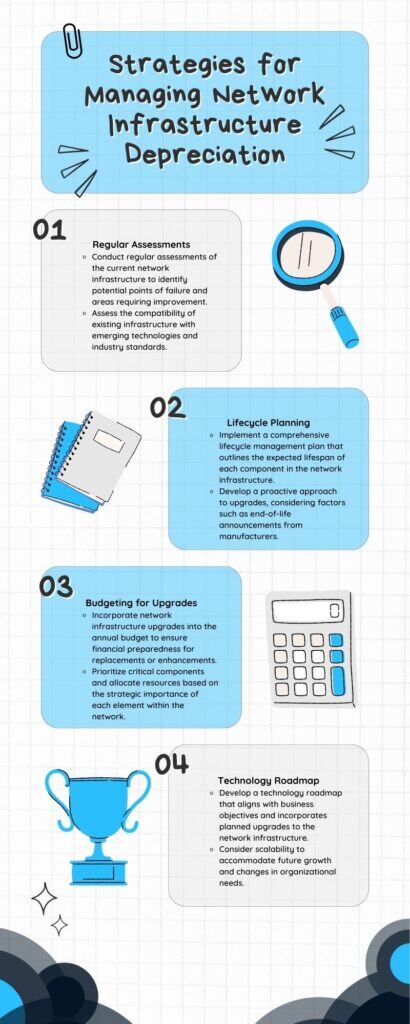
Run Regular Network Assessments
Conduct regular assessments of the current network infrastructure to identify potential points of failure and areas requiring improvement.
Assess the compatibility of existing infrastructure with emerging technologies and industry standards.
Build a Lifecycle Management Plan
Implement a comprehensive lifecycle management plan that outlines the expected lifespan of each component in the network infrastructure.
Develop a proactive approach to upgrades, considering factors such as end-of-life announcements from manufacturers.
Budget for Infrastructure Upgrades
Incorporate network infrastructure upgrades into the annual budget to ensure financial preparedness for replacements or enhancements.
Prioritize critical components and allocate resources based on the strategic importance of each element within the network.
Maintain a Technology Roadmap
Develop a technology roadmap that aligns with business objectives and incorporates planned upgrades to the network infrastructure.
Consider scalability to accommodate future growth and changes in organizational needs.
Strengthen Vendor Relationships
Establish strong relationships with technology and equipment vendors to stay informed about upcoming releases and product roadmaps.
Leverage vendor support and maintenance agreements to optimize the performance and longevity of network infrastructure.
Platforms like Sonar Software help ISPs keep network inventory and asset data in one place, making lifecycle tracking and upgrade planning easier to manage.
Final Thoughts
Managing depreciation for network infrastructure is an important aspect of maintaining a secure, efficient, and competitive business environment. By adopting a proactive approach to lifecycle planning, budgeting, and vendor relationships, Internet Service Providers can navigate the complexities of network infrastructure depreciation with confidence, ensuring their digital foundations remain robust and resilient in the face of constant change.
Frequently asked questions
What is network infrastructure depreciation?
It is the systematic allocation of the cost of network hardware, software, and protocols over their useful life, reflecting the decreasing value of these assets as they age and become obsolete.
What factors drive network infrastructure depreciation for ISPs?
The main factors are technological advancements that cause obsolescence, evolving security standards that require upgrades, and the rising maintenance costs of aging components.
How can ISPs manage network infrastructure depreciation?
ISPs can manage depreciation through regular assessments, a lifecycle management plan, annual budgeting for upgrades, a technology roadmap, and strong vendor relationships.
Questions, answered.
What is network infrastructure depreciation for ISPs?
Network infrastructure depreciation is the systematic allocation of an asset's cost over its useful life. It reflects the declining value of hardware as it ages.
What factors drive network infrastructure depreciation?
Technological advancements, evolving security standards, and rising maintenance costs are the key factors that drive network infrastructure depreciation for ISPs.
How can ISPs manage the depreciation of aging network infrastructure?
A comprehensive lifecycle management plan defines the expected lifespan of each network component and turns end-of-life announcements into proactive upgrades. Incorporating network upgrades into the annual budget keeps ISPs financially prepared for replacements and enhancements.
Why is lifecycle planning important for ISP network assets?
Lifecycle planning defines the expected lifespan of each network component so ISPs can plan replacements before assets fail. It also helps turn vendor end-of-life announcements into proactive upgrades rather than emergencies.
See it on the platform
20 minutes wired to your operation.
An ISP-only specialist walks Sonar through your specific use case. No generic deck, no horizontal SaaS pitch.
Book a meetingWritten by
Steve ShillingsburgChief Technology Officer
Steve Shillingsburg is CTO at Sonar Software, leading product and technology strategy with over two decades of SaaS experience.
All posts by Steve Shillingsburg