
Product
The Essential Tech Stack for Fiber Internet Providers in 2024
Explore how Internet Service Providers are currently utilizing technology to facilitate growth and scalability in 2024.👇
Taneil Currie, Former Senior Manager, Growth Marketing
January 4, 2024 · 5 MIN · UPD JUN 16, 2026
A fiber internet provider's essential tech stack in 2024 covers five core systems: ISP billing and finance reporting, field operations and technician scheduling, customer support ticketing, inventory and purchase order management, and network monitoring. Choosing software that automates these workflows is what lets a fiber provider scale without scaling its headcount or its errors.
When starting your ISP, your initial focus may have been around the technological requirements essential for delivering services to customers. However, the technological infrastructure supporting your business operations plays an equally important role, especially as your ISP undergoes expansion.
In the beginning, a small and resourceful team may have handled tasks relatively independently. But without the right tech stack, scaling your ISP will be difficult.
Choosing a technology stack that harnesses automation and enhances productivity can streamline workflows, facilitating accelerated growth while minimizing challenges linked to expansion.
Explore how fiber providers are currently utilizing technology to facilitate growth and scalability in 2024.👇
ISP Billing and Finance Reporting Software
Customer billing can be a tedious and error-prone process that leads to delayed payments and an inability to track finances effectively. As the volume of customers and transactions increases, it can become increasingly difficult to manage manual billing processes, making it challenging for businesses to scale and grow.
New advancements in billing software can help you improve efficiency, reduce human error, and provide a clearer financial picture, leading to more timely payments and better overall financial management.
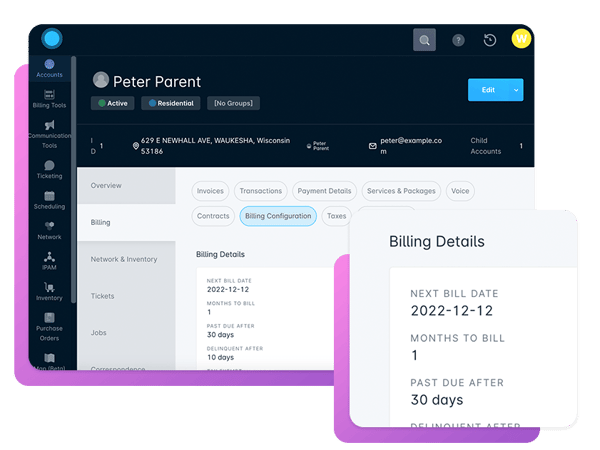
Sonar offers a comprehensive solution for ISP billing and finance reporting. Our billing module includes everything you need to bill your customers including usage-based billing, VoIP billing, automatic proration, geotaxation, touchless invoicing, automatic late fees, a customizable customer-facing portal, and more.
Field Operations and Technician Scheduling
Field operations play a paramount role in deploying, maintaining, and optimizing fiber optic networks. From network installation and maintenance to troubleshooting and customer support, the efficiency of field operations not only ensures the seamless functioning of the network but also plays a vital role in shaping the overall customer experience.
The field service scheduling module in Sonar transforms how fiber providers manage their on-site operations and reduce wasted truck rolls. Get real-time visibility across your field operations to prioritize service requests and prevent scheduling conflicts. Schedule and manage jobs efficiently with a drag-and-drop scheduling interface, technician capacity planning, real-time work order updates, automatic appointment reminders, and more.
Customer Support and Service Ticketing
Exceptional customer service is a key differentiator for fiber providers. As customers increasingly rely on fiber optic networks for their internet needs, the ability to promptly address concerns and provide technical assistance is vital to the provider's success. The efficiency of the ticketing process not only directly influences customer satisfaction but also contributes to the provider's reputation and the overall quality of service.
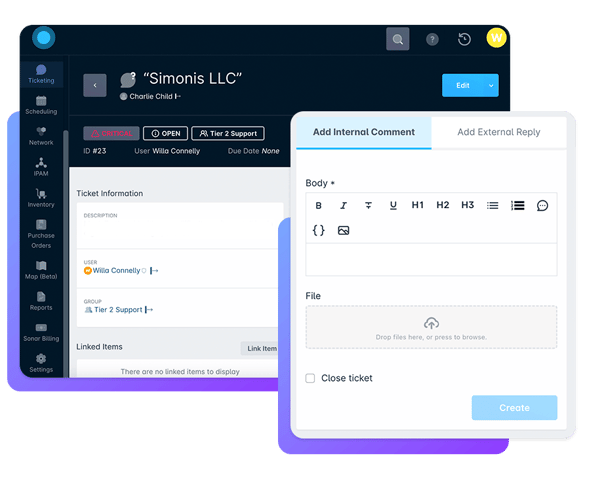
The customer service ticketing module in Sonar empowers providers to deliver top-notch support. Integrated with a customer portal, this module allows customers to submit and track service requests effortlessly. Automation features, such as ticket assignment and escalation, enhance response times, leading to improved customer satisfaction.
Inventory Management and Purchase Orders
Effective management of inventory is crucial for fiber providers to maintain seamless operations. Managing stock levels and anticipating future demands underpin the provider's ability to deploy and maintain a robust fiber optic network. A well-managed inventory and procurement strategy not only streamline operational workflows but also safeguards against potential disruptions.
Sonar's inventory and purchase order module streamlines the procurement process, from order creation to vendor management. With features like automated stock level monitoring, purchase order generation, and vendor performance analytics, fiber providers can optimize their inventory, reduce costs, and enhance overall efficiency.
Network Monitoring and Incident Response
Network monitoring plays a pivotal role in ensuring the continuous health, performance, and security of the fiber network. From real-time surveillance of network traffic to the identification of anomalies and potential vulnerabilities, a robust network monitoring system not only enhances the provider's responsiveness but also contributes to the seamless delivery of high-speed internet services.
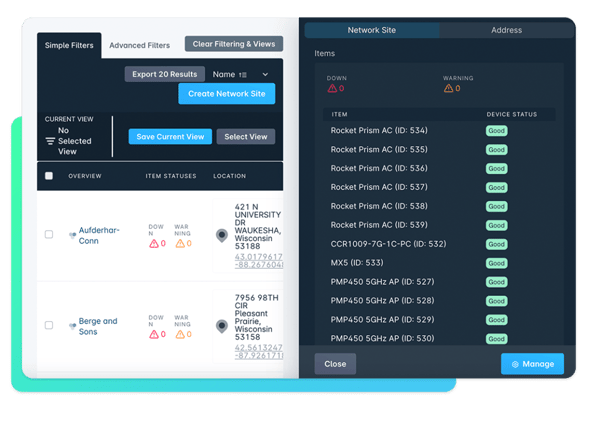
Sonar's network monitoring module equips fiber providers with advanced tools for network monitoring, incident detection, and rapid response. With features like real-time alerts, automated incident resolution workflows, and comprehensive incident reporting, fiber providers can proactively manage network issues, ensuring minimal disruption to services.
Optimize your network troubleshooting process by swiftly identifying and addressing the underlying issues affecting performance through alerting rotations. Enhance responsiveness by managing and addressing specific customer concerns during outages with individualized tickets. Minimize support ticket volumes by effectively communicating network incidents or planned outages using our mass communication tool.
Final Thoughts
As we enter 2024, fiber providers must embrace a tech stack that meets the current demands and positions them for future growth. Sonar's suite of solutions provides a comprehensive and integrated approach to address the diverse needs of fiber providers, from billing and finance to field operations, customer service, inventory management, and network monitoring. By adopting this essential tech stack, fiber providers can not only meet but exceed the expectations of their customers.
Frequently asked questions
What should be in a fiber provider's tech stack?
At a minimum, a fiber provider's tech stack should cover ISP billing and finance reporting, field operations and technician scheduling, customer support ticketing, inventory and purchase order management, and network monitoring with incident response. Running these as one integrated system is what lets a provider scale without adding manual overhead.
How does automation help an ISP scale?
Automation reduces human error and frees a small team from repetitive manual work. Automated billing speeds up timely payments, automated ticket assignment and escalation improves response times, and automated incident workflows help providers resolve network issues with minimal disruption.
Questions, answered.
What does a fiber internet provider's tech stack need to include in 2024?
A fiber provider's tech stack should cover billing, field operations, customer ticketing, inventory, and network monitoring. Bringing these functions into one integrated system supports growth and scalability.
How does billing software help ISPs scale and reduce errors?
Automated billing software reduces human error and speeds up payments. It also gives ISPs a clearer financial picture as transaction volume grows.
What does field service scheduling software do for fiber providers?
Field service scheduling gives fiber providers real-time visibility into service requests. That visibility lets them prioritize requests and prevent scheduling conflicts.
How does network monitoring improve incident response for ISPs?
Network monitoring with real-time alerts and automated incident workflows lets fiber providers manage issues proactively. This helps keep service disruption to a minimum. Automated ticket assignment and escalation further improve response times and customer satisfaction.
See it on the platform
20 minutes wired to your operation.
An ISP-only specialist walks Sonar through your specific use case. No generic deck, no horizontal SaaS pitch.
Book a meeting